Sohar Industries SPC Home

Category

Technical Insights

19 articles

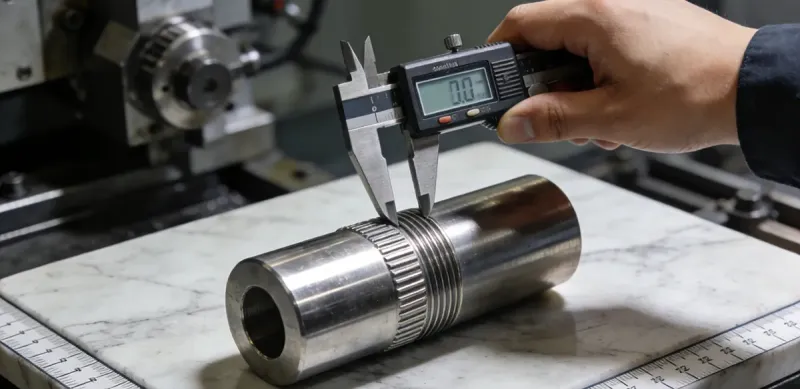
Documented but Not Dependable: The Dangerous Gap Between Component Traceability and Verified Material Integrity

Documented but Not Dependable: The Dangerous Gap Between Component Traceability and Verified Material Integrity

Comprehensive traceability records give manufacturers confidence in their supply chains — but documentation alone cannot detect the metallurgical degradation, environmental exposure, or handling damage that accumulates between certification and assembly. Understanding why lot tracking and batch certifications routinely mask real-world material failures is one of the most consequential technical challenges facing US precision manufacturers today.
When Cutting-Edge Machines Cut Into Your Bottom Line: The Hidden Liability of Over-Precise Equipment

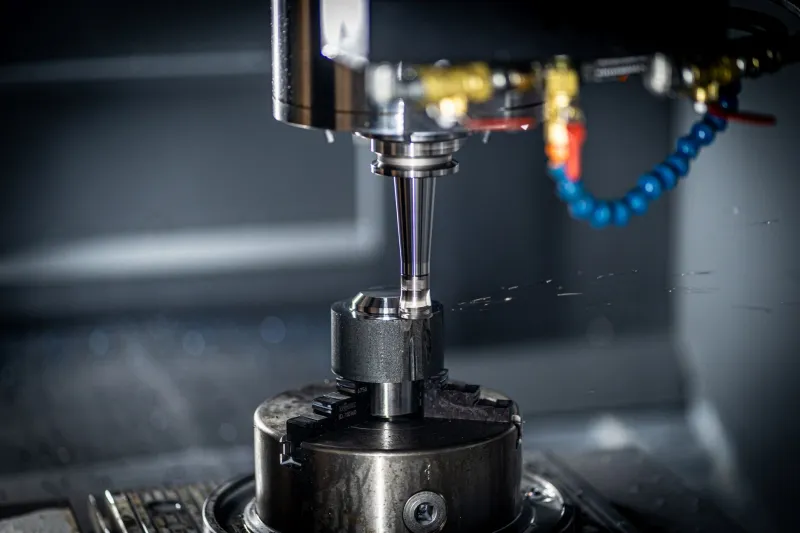
When Cutting-Edge Machines Cut Into Your Bottom Line: The Hidden Liability of Over-Precise Equipment

High-precision machinery represents some of the most significant capital investments a manufacturer can make — but when that precision exceeds what the application actually demands, the investment can quietly become a liability. This article examines how misaligned equipment specifications drive up total cost of ownership, slow throughput, and erode competitiveness in markets where 'good enough' is genuinely sufficient.

Simulated Success, Real-World Shortfalls: The Honest Limits of Digital Twin Technology in Manufacturing

Simulated Success, Real-World Shortfalls: The Honest Limits of Digital Twin Technology in Manufacturing

Digital twin technology promises manufacturers a risk-free proving ground for processes, equipment configurations, and production scenarios. Yet a growing number of US manufacturers are discovering that flawless virtual performance rarely survives contact with factory floor realities. Understanding where the model ends and the operation begins is not a technical footnote — it is a strategic imperative.

Chasing Zero Defects by Tightening the Wrong Screws: How Overprecision Undermines Quality

Chasing Zero Defects by Tightening the Wrong Screws: How Overprecision Undermines Quality

When manufacturers tighten tolerances beyond what their processes can reliably deliver, the result is rarely better quality — it is higher scrap, more rework, and elevated warranty exposure. Understanding the relationship between specification limits and process capability reveals why relaxing certain tolerances, combined with investments in process stability, consistently produces superior outcomes.

Tighter Is Not Always Better: Rethinking Tolerance Specifications as a Strategic Business Decision

Tighter Is Not Always Better: Rethinking Tolerance Specifications as a Strategic Business Decision

Across American manufacturing floors, the instinct to specify tighter tolerances is deeply ingrained — equated with quality, professionalism, and competitive positioning. Yet mounting evidence suggests that over-specified tolerances frequently introduce more cost, complexity, and failure risk than they eliminate. This analysis examines how strategic tolerance relaxation, applied with precision and purpose, can improve both financial performance and product reliability.

One System, One Standard: How Unified Precision Strategies Are Redefining Manufacturing Excellence

One System, One Standard: How Unified Precision Strategies Are Redefining Manufacturing Excellence

Leading US manufacturers are discovering that precision is not a departmental responsibility — it is an organizational discipline. When engineering, operations, and quality functions operate as a single integrated system rather than competing silos, the results extend far beyond tighter tolerances and lower defect rates. The financial and competitive gains are reshaping how serious industrial operations think about structure itself.

Tolerance Overkill: The Hidden Costs of Over-Specifying Precision in Modern Manufacturing

Tolerance Overkill: The Hidden Costs of Over-Specifying Precision in Modern Manufacturing

Tighter tolerances are widely assumed to signal superior engineering—but for many US manufacturers, excessive precision specifications are quietly inflating costs, complicating supply chains, and delivering no measurable benefit to end customers. This article examines the economic and operational consequences of tolerance over-specification and presents a framework for right-sizing precision requirements.

Expensive Equipment, Undertrained Operators: Closing the Precision Literacy Gap on the Manufacturing Floor

Expensive Equipment, Undertrained Operators: Closing the Precision Literacy Gap on the Manufacturing Floor

Capital investment in advanced manufacturing equipment rarely delivers its full potential when the workforce operating it lacks a foundational understanding of tolerances, measurement principles, and quality systems. This article examines how leading US manufacturers are addressing the human side of precision manufacturing through structured training, cultural change, and deliberate knowledge-building programs.

When Smarter Measurement Creates Slower Manufacturing: Navigating the Metrology Upgrade Trap

When Smarter Measurement Creates Slower Manufacturing: Navigating the Metrology Upgrade Trap

Investing in advanced metrology equipment is often presented as an unambiguous win for manufacturing quality—but the operational reality is considerably more complex. From retraining burdens to data interpretation gaps, sophisticated measurement systems can introduce friction that temporarily degrades the very performance they were purchased to improve. This article examines the conditions under which measurement upgrades backfire and offers a structured framework for deciding when the investmen

New Equipment, Same Delays: The Constraint Problem Automation Cannot Solve on Its Own

New Equipment, Same Delays: The Constraint Problem Automation Cannot Solve on Its Own

Capital investment in advanced automation is one of the most consequential decisions a manufacturing operation can make — yet many facilities that upgrade their machinery find their lead times stubbornly unchanged. The reason, more often than not, has nothing to do with the equipment itself. Understanding where your true operational constraint lives is the prerequisite that most automation strategies skip entirely.

When the Ruler Itself Is Wrong: Uncovering the Hidden Costs Inside Your Measurement Infrastructure

When the Ruler Itself Is Wrong: Uncovering the Hidden Costs Inside Your Measurement Infrastructure

Most manufacturing operations invest heavily in catching defective parts, yet few scrutinize whether the measurement systems doing the catching are themselves a source of financial loss. Calibration drift, operator-to-operator variability, and redundant inspection touchpoints can quietly erode margins long before a single nonconforming part reaches a customer. A structured measurement system analysis audit reveals where your quality infrastructure is working against you.

Supplier Quality Agreements Are Only as Strong as the Stress They Have Never Faced

Supplier Quality Agreements Are Only as Strong as the Stress They Have Never Faced

Most supplier quality agreements are built for ideal conditions, not the production floor realities that expose their weaknesses. When demand surges, lead times compress, or material substitutions occur, the gaps in standard SQA frameworks become costly in ways that rarely appear in the original contract language. This article examines where conventional agreements break down and how US manufacturers can renegotiate terms that hold up when it matters most.

What Your Inspection Floor Isn't Telling You: The Silent Financial Drain of Outdated Quality Control

What Your Inspection Floor Isn't Telling You: The Silent Financial Drain of Outdated Quality Control

For many US manufacturers, quality control feels like a safeguard — but aging inspection methods may be quietly functioning as a liability. From undetected defect cascades to labor-intensive over-inspection cycles, the true cost of traditional quality processes rarely appears on a single line item. This analysis examines where those costs hide and what modern inspection infrastructure can realistically recover.

Custom Tooling's Hidden Price Tag: When Specialized Solutions Quietly Erode Your Margins

Custom Tooling's Hidden Price Tag: When Specialized Solutions Quietly Erode Your Margins

Custom tooling investments often appear financially sound at the point of purchase, yet the full cost of ownership tells a different story once maintenance, obsolescence, and inflexibility are factored in. This analysis examines the decision frameworks US manufacturers should apply before committing capital to one-off solutions. Understanding when standardization outperforms customization is among the most consequential—and underappreciated—disciplines in precision manufacturing.

Quality at What Cost? Rethinking the Full Economics of Precision in Your Manufacturing Operation

Quality at What Cost? Rethinking the Full Economics of Precision in Your Manufacturing Operation

Most manufacturers track defect rates and inspection pass/fail ratios, but few account for the full financial burden embedded in how precision is defined and enforced on the shop floor. This article presents a structured framework for evaluating where tighter tolerances generate genuine return and where they quietly erode margin. Understanding that distinction may be the most consequential cost-reduction move available to your operation.

Precision at What Price? The Case for Smarter Tolerance Specification in Modern Manufacturing

Precision at What Price? The Case for Smarter Tolerance Specification in Modern Manufacturing

Tighter tolerances are often treated as a proxy for quality, but the economics tell a more complicated story. Over-specifying dimensional requirements can quietly inflate production costs, drive up scrap rates, and compress margins without delivering any measurable benefit to end-product performance. Understanding where precision genuinely matters—and where it does not—is one of the most consequential decisions a manufacturing operation can make.

Predictive Maintenance Programs: A Step-by-Step ROI Framework for US Manufacturing Operations

Predictive Maintenance Programs: A Step-by-Step ROI Framework for US Manufacturing Operations

Reactive repair strategies remain surprisingly common across US manufacturing facilities, despite well-documented evidence that predictive maintenance programs deliver superior asset lifecycle economics. This guide breaks down the financial comparison between maintenance approaches, presents real-world cost scenarios, and provides a practical evaluation framework that operations and maintenance leaders can apply to their own facilities today.

Unplanned Downtime Is Bleeding Your Operation Dry — Here Is What the Data Says

Unplanned Downtime Is Bleeding Your Operation Dry — Here Is What the Data Says

Unplanned equipment failures cost US manufacturers an estimated $50 billion annually, yet many facilities still operate on reactive maintenance schedules that amplify risk rather than reduce it. Predictive maintenance technologies — powered by IIoT sensors, machine learning, and real-time analytics — are fundamentally changing that equation. This article examines the financial case for proactive strategies and offers a practical framework for industrial decision-makers ready to protect their bot

When Fractions of a Millimeter Determine Millions of Dollars: The True Business Impact of Manufacturing Tolerances

When Fractions of a Millimeter Determine Millions of Dollars: The True Business Impact of Manufacturing Tolerances

Precision tolerances are rarely discussed in boardrooms, yet they quietly govern product reliability, regulatory compliance, and supply chain continuity across every major industrial sector. Understanding where tighter specifications deliver measurable returns — and where they represent unnecessary expenditure — is one of the most consequential decisions a US manufacturer can make. This analysis examines the cascading consequences of tolerance decisions and offers a framework for getting them ri